
Optical Components: Functional Classification and Examples of Lenses and Prisms (Easy-to-Understand Version)
November 3, 2025
Benjamin Wu
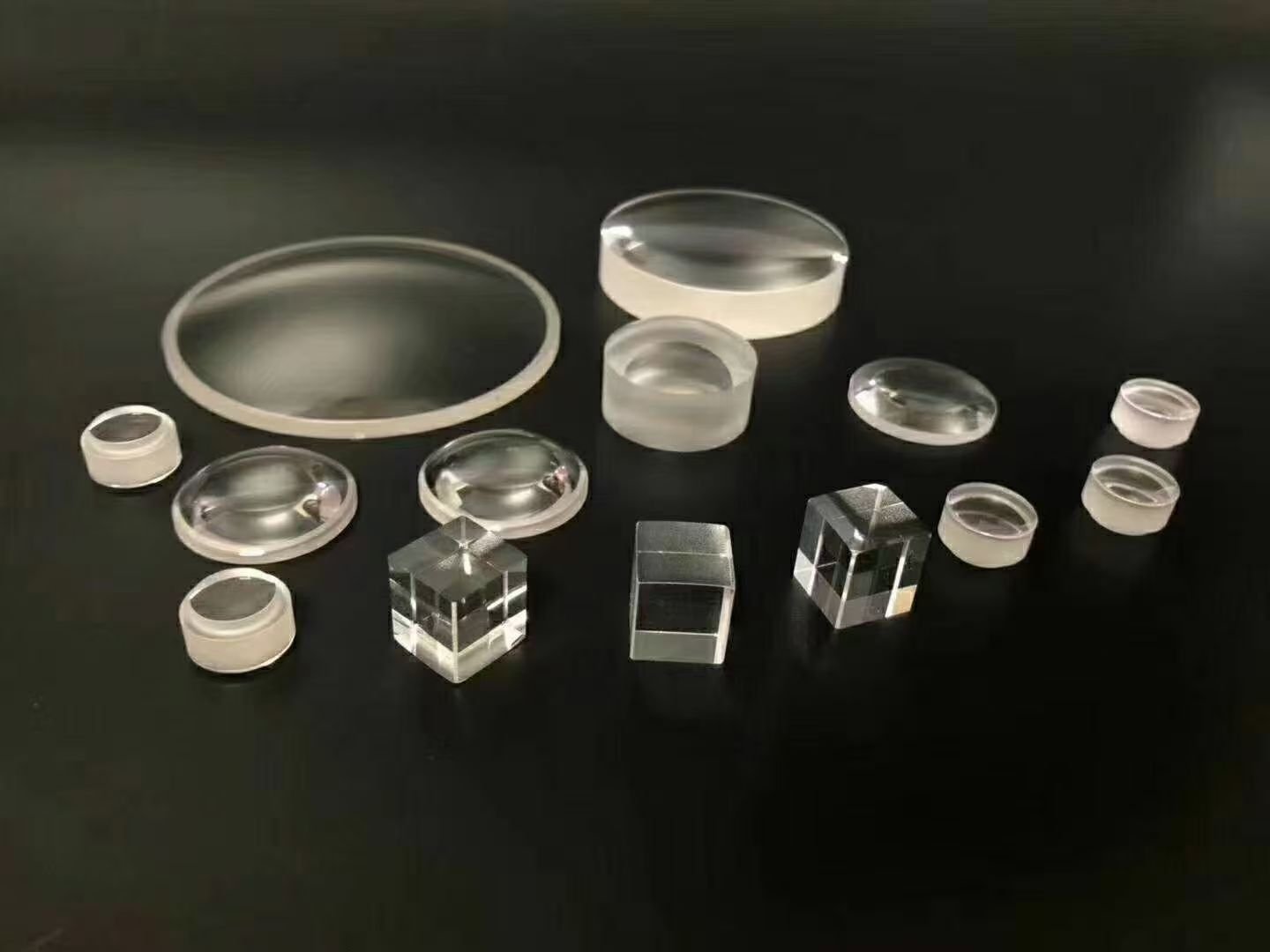
Optical Components: Lenses & Prisms
A functional classification with examples
1. Lenses – Light’s "Steering Wheel"
Function: Bend light via refraction to converge or diverge beams.
(1) Convex Lens (Converging Lens)
- Shape: Thick at the center, thin at edges (like a lentil).
- Action: Focuses parallel light to a focal point.
- Examples:
- Magnifying glass: Concentrates sunlight to burn paper.
- Reading glasses: Corrects presbyopia (age-related farsightedness).
- Camera lens: Focuses light onto the sensor for sharp images.
(2) Concave Lens (Diverging Lens)
- Shape: Thin at the center, thick at edges (like a bowl).
- Action: Spreads parallel light outward (appears to diverge from a virtual focus).
- Examples:
- Nearsighted (myopia) glasses: Shifts focus backward for clear vision.
- Car side mirrors: Provides a wider field of view (diverging light).
2. Prisms – Light’s "Splitter & Bender"
Function: Manipulate light via refraction/reflection to split or redirect light.
(1) Dispersion Prism (Rainbow Maker)
- Shape: Triangular prism (classic Newtonian style).
- Action: Splits white light into spectral colors (ROYGBIV).
- Physics: Different wavelengths refract at unique angles (violet bends most, red least).
- Applications:
- Spectroscopy: Analyzes light composition (e.g., star spectra).
- Educational demos: Shows light’s chromatic composition.
(2) Reflective Prism (Light Folding Tool)
- Shape: Right-angle or pentagonal prism.
- Action: Redirects light via total internal reflection (no mirror coating needed).
- Applications:
- DSLR viewfinders: Uses a pentaprism to flip images upright.
- Periscopes: Redirects light 90° for hidden observation.
(3) Polarizing Prism (Light Filter)
- Shape: Crystal-cut (e.g., Nicol prism).
- Action: Only transmits light with a specific polarization orientation.
- Applications:
- 3D glasses: Separates left/right eye images in cinemas.
- Polarized microscopy: Studies crystal structures.
Summary Table
| Type | Component | Key Function | Real-World Example |
|---|---|---|---|
| Lenses | Convex | Converges light | Magnifier, camera lens |
| Concave | Diverges light | Myopia glasses, car mirrors | |
| Prisms | Dispersion | Splits white light | Spectroscope, rainbow demo |
| Reflective | Bends light path | Periscopes, DSLR viewfinder | |
| Polarizing | Filters polarized light | 3D glasses, polarizers |
Key Takeaways
- Lenses → Focus or spread light (imaging/vision correction).
- Prisms → Split, bend, or filter light (spectroscopy/reflection).
💡 Bonus: Modern optics (e.g., cameras, telescopes) combine lenses and prisms for advanced control!