
Ruby (Corundum) Components Overview
November 27, 2025
Benjamin Wu
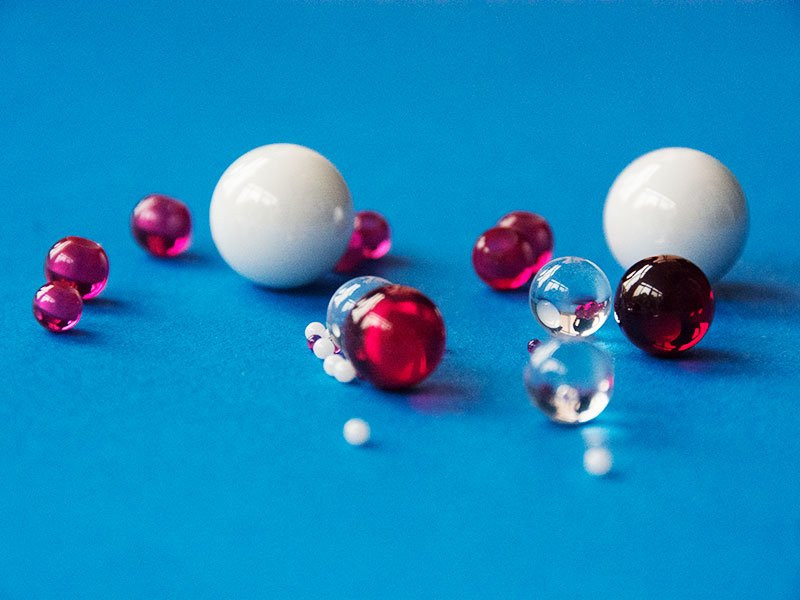
Ruby Components: Key Points
1. Overview
Synthetic ruby (Al₂O₃ + Cr³⁺) offers industrial-grade purity and crystal structure for electronics/optics.
2. Properties
| Key Property | Advantage |
|---|---|
| Hardness (Mohs 9) | Wear/corrosion resistant |
| High Melting Point | 2050°C (thermal stability) |
| Thermal Conductivity | Efficient heat dissipation |
| Optical Transparency | Visible/IR light transmission |
| Electrical Insulation | Safe for high-voltage use |
3. Production (Flame Fusion)
- Mix Al₂O₃ + Cr₂O₃
- Melt at 2900°C (oxyhydrogen flame)
- Grow crystals on seed rods
- Anneal to reduce stress
- Cut into wafers/rods
High-purity apps use hydrothermal method.
4. Applications
- Lasers: 694nm red light (cutting, medical)
- Semiconductors: GaN LED substrates
- Electronics: Vacuum tube electrodes
- Optics: Filters, laser windows
5. Summary
- Why synthetic? Purer, uniform, scalable.
- Core use: Laser sources, LED tech, high-voltage systems.
- Key process: Flame fusion + crystal growth.