
Sapphire Optical Windows: Complete Technical Guide for Industrial Buyers
Sapphire Window Procurement Guide: Spec Selection, Cost Drivers, and OEM Supplier Checklist
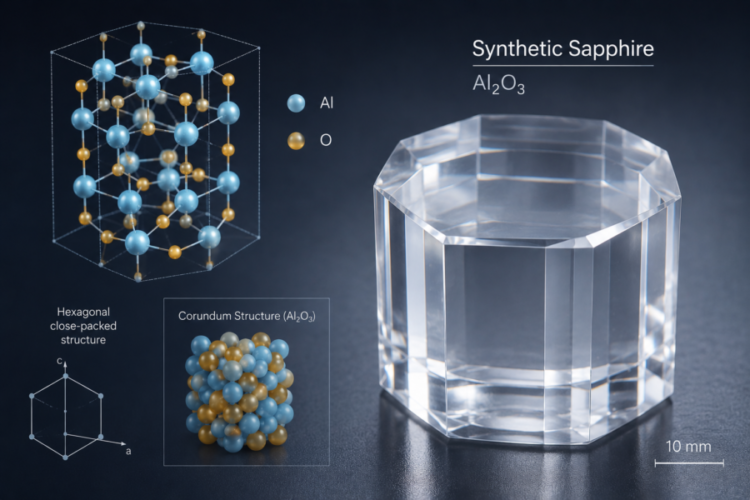
A sapphire window is a precision-machined optical component fabricated from single-crystal aluminum oxide (Al₂O₃). It delivers exceptional Mohs hardness of 9, broad spectral transmission ranging from 0.2 to 5 μm, and superior chemical inertness, making it ideal for harsh industrial environments.
Introduction
Engineers frequently conflate synthetic sapphire with generic glass or fused silica, a misunderstanding that often leads to premature component failure in high-stress applications. A true synthetic sapphire window is not merely "glass." It is a single-crystal ceramic characterized by a Mohs hardness of 9 and transmission spanning 0.2 to 5 micrometers. This material distinction is critical for laser systems, medical devices, and semiconductor equipment where durability and optical clarity are non-negotiable requirements.
This guide focuses on B2B procurement strategies for technical buyers. We will decode critical specifications, analyze key cost drivers, and provide a comprehensive supplier evaluation checklist. The objective is to assist you in selecting the right optical window without overpaying for unnecessary specifications or under-specifying for demanding operational conditions.
What Is a Sapphire Window and Why Use It?
The primary value proposition of a synthetic sapphire window lies in its mechanical and thermal resilience compared to traditional optical materials like fused silica, BK7 glass, or Gorilla Glass. While fused silica offers respectable UV transmission, it lacks the scratch resistance required for abrasive environments. BK7 is cost-effective but remains brittle and chemically vulnerable to alkalis.
Sapphire provides a unique combination of properties. Its Mohs hardness of 9 makes it second only to diamond in scratch resistance, ensuring longevity in applications involving particle impact or frequent cleaning cycles. Furthermore, its thermal conductivity of 23 W/(m·K) at 25°C allows it to dissipate heat effectively. This makes it ideal for high-power laser windows where thermal lensing would otherwise destroy a glass alternative.
| Material | Hardness (Mohs) | Thermal Conductivity (W/m·K) | Max Temp (°C) | Best Use Case |
|---|---|---|---|---|
| Fused Silica | 6.5 | 1.38 | 1200 | UV spectroscopy, low heat |
| BK7 Glass | 5.5 | 1.1 | 450 | Visible optics, low cost |
| Sapphire | 9.0 | 23.0 | 2040 | Harsh environments, high power |
For OEMs integrating fiber lasers (e.g., 1.0–1.5 μm fiber-coupled systems), the choice is often binary. (Note: CO₂ lasers at 10.6 μm operate outside sapphire's 0.2–5 μm transmission range — use ZnSe or Ge instead.) If the environment involves dust, moisture, or high thermal loads, sapphire is the only viable option among transparent ceramics. Its density of 3.98 g/cm³ adds minimal weight while providing structural integrity for vacuum seals or high-pressure viewports.
Critical Specifications to Verify with Suppliers
When issuing an RFQ, vague requests lead to ambiguous quotes and incompatible parts. You must specify exact parameters aligned with your system's operational limits. The following specifications are non-negotiable for industrial-grade procurement.
First, define the spectral requirements. Standard sapphire transmits from 0.2 μm to 5 μm. If your application requires deep UV transmission below 0.2 μm, standard sapphire absorbs heavily, and you may need specialized grades or coatings. Conversely, for mid-IR applications beyond 5 μm, sapphire becomes opaque, and materials like ZnSe or Ge are more appropriate. Sapphire's refractive index of 1.76–1.78 across the 0.5–4 μm band (lowest in the visible, slightly higher in UV) is critical for any application requiring precise focal-plane positioning or anti-reflection coating design.
Second, surface quality and parallelism dictate optical performance. For imaging systems, parallelism errors cause beam walk-off and image distortion. Specify parallelism in arcseconds (typically <30 arcsec, with <5 arcsec for precision work). Surface quality should follow MIL-PRF-13830B standards, such as 60-40 or better for laser paths. Scratches and digs directly impact the laser damage threshold (LIDT).
Third, AR coating options vary significantly in performance and durability. Single-layer MgF₂ coatings are cost-effective but offer limited bandwidth. Multi-layer broadband AR coatings provide higher transmission but require careful handling during installation. Verify the coating's LIDT rating, especially for pulsed lasers.
Finally, consider the crystal orientation. C-plane wafers are standard for optical windows due to their isotropic optical properties in the plane. However, specific applications may require A-plane or R-plane orientations for polarization-sensitive tasks. Always confirm the cut orientation with your supplier to avoid unexpected birefringence issues.
How Sapphire Windows Are Manufactured
Understanding the manufacturing process helps you evaluate supplier capability and justify cost differences. High-quality synthetic sapphire is grown using the Czochralski method, pulling a seed crystal from molten aluminum oxide at temperatures exceeding 2040°C. This process yields a large ingot with consistent crystal structure.
The ingot is then sliced into wafers using diamond wire saws. Precision grinding and lapping follow to achieve flatness, while chemical mechanical polishing (CMP) reduces surface roughness to atomic levels. This stage is critical for achieving the required surface quality and parallelism.
After polishing, the windows undergo edge treatment to prevent chipping. Beveling or polishing the edges enhances mechanical strength. Finally, anti-reflective coatings are applied via physical vapor deposition (PVD). The quality of the coating depends on the cleanliness of the chamber and the expertise of the technicians.
Reputable manufacturers source crystals only from established, audited producers with documented material traceability. This ensures the base material meets rigorous purity standards. Buyers should ask for certificates of conformity (CoC) that trace back to the crystal growth batch, verifying material origin and optical homogeneity.
Procurement Decision Matrix
Selecting the right sapphire window involves balancing performance needs against budget constraints. The following matrix outlines common OEM applications and the corresponding specification priorities. Use this to streamline your supplier discussions and reduce back-and-forth RFQ cycles.
| Application | Recommended Spec | Cost Driver | Lead Time Range |
|---|---|---|---|
| High-Power Laser Window | C-plane, 2–4 μm AR, 60-40 SQ | LIDT coating, parallelism | 2–4 weeks |
| Medical Endoscope Viewport | Small diameter, polished edges | Size complexity, edge polish | 1–2 weeks |
| Semiconductor Inspection | High parallelism, cleanroom grade | Surface quality, packaging | 3–5 weeks |
| Defense Sensor Dome | Large aperture, ruggedized | Size, mounting hardware | 4–8 weeks |
| Vacuum Viewport | Flange-bonded, high integrity | Edge treatment, bonding | 2–3 weeks |
Cost drivers primarily include aperture size, as larger crystals are exponentially harder to grow without defects. Complex shapes or thin profiles also increase machining time. However, standard sizes in stock can be shipped rapidly, offering significant lead time advantages over custom orders.
From more than 50 deployments of sapphire optical windows for OEM partners, the single most common procurement failure we see occurs when engineers specify fused silica or BK7 for harsh-environment applications where sapphire would have eliminated the failure mode entirely. The unit-price delta of 3–8× is real but the cost-of-failure delta over a 5-year service life is typically 50–100× (replacement labor plus downtime). For high-power laser, semiconductor inspection, defense sensor dome, and medical endoscope applications, sapphire is the right default — and the procurement conversation should start there.
Supplier Evaluation Checklist
Choosing the right supplier is as important as selecting the right material. Many vendors act as middlemen, outsourcing production and lacking technical expertise. Evaluate potential partners using the following criteria to ensure reliability and quality.
5 Red Flags to Avoid
- No Transparency on Origin: Suppliers who cannot name their crystal growers or show factory audits.
- Vague Coating Specs: Inability to provide LIDT data or coating bandwidth details.
- No Quality Control: Lack of interferometry reports or surface quality inspection records.
- Generic Responses: Copy-paste replies to technical questions about parallelism or birefringence.
- Unrealistic Pricing: Quotes significantly lower than market average often indicate recycled material or poor machining.
7 Evaluation Criteria for OEMs
- Technical Support: Can engineers provide DFM reviews and application advice?
- Manufacturing Capability: Do they own polishing/coating lines or just assemble?
- Quality Standards: ISO 9001 certification and MIL-PRF-13830B adherence.
- Lead Time Reliability: Historical data on on-time delivery performance.
- Customization Flexibility: Ability to handle non-standard sizes or special coatings.
- Packaging & Shipping: Secure, cleanroom-compatible packaging for fragile optics.
- Responsiveness: Speed and accuracy of communication during the RFQ process.
Conclusion
Procuring sapphire windows requires a clear understanding of material properties, application demands, and supplier capabilities. By focusing on critical specs like hardness 9, transmission 0.2–5 μm, and thermal conductivity 23 W/(m·K), you can avoid costly mismatches. Remember that quality is driven by crystal purity and machining precision, not just price.
For OEMs seeking reliable supply chains, prioritize partners who offer engineering support and transparent manufacturing processes. Verify all specs against your system requirements before placing orders.
Request a Quote — contact our engineering team via Wanbaotek Contact for spec review, DFM feedback, and lead-time quotes.
Frequently Asked Questions
Q1: Can sapphire optical windows handle CO₂ laser applications?
No. CO₂ lasers operate at 10.6 μm, which falls outside sapphire's 0.2–5 μm transmission range. For CO₂ laser systems, use ZnSe (preferred for 10.6 μm) or germanium. Sapphire is ideal for fiber lasers (1.0–1.5 μm), Nd:YAG (1.064 μm), Ti:Sapphire, and other near-IR to mid-IR short-wave applications.
Q2: What is the typical lead time for custom sapphire optical windows?
Lead time depends on size, coating, and surface quality. Standard apertures (10–50 mm diameter, 1–3 mm thickness) with no AR coating typically ship in 1–2 weeks. Custom sizes or broadband AR coatings extend to 2–4 weeks. Large apertures (>100 mm) or complex geometries can require 4–8 weeks. Stock sizes without coating may ship same-day from US/EU warehouses.
Q3: How does sapphire compare to Gorilla Glass or chemically strengthened glass for harsh-environment viewports?
Sapphire offers 9 Mohs hardness (vs. Gorilla Glass at ~6–7), much broader transmission (0.2–5 μm vs. Gorilla's 0.4–2.5 μm), higher melting point (2040°C vs. ~660°C), and ~7× the thermal conductivity. Sapphire is the right choice for semiconductor inspection, high-power laser viewports, and defense sensor domes where Gorilla Glass would fail. Glass remains cost-effective for consumer electronics where scratch resistance is the primary concern.
Related Articles
- How Do We Make a Sapphire Window?
- Industrial Sapphire Window Overview
- Sapphire Lens Laser Damage Threshold Guide
- AR Coating Options for Industrial Optics
- Sapphire Material Properties & B2B Selection Guide
About Wanbaotek
Wanbaotek (Sichuan Wanbaohui Technology Co., Ltd.) supplies c-plane and random-cut synthetic sapphire optical windows for OEM applications in semiconductor, defense, medical-laser, and aerospace markets, with surface finishes to 10-5 scratch-dig per ISO 10110-7 and custom AR coatings.


