
Why Synthetic Sapphire Dominates LWIR Thermal Imaging
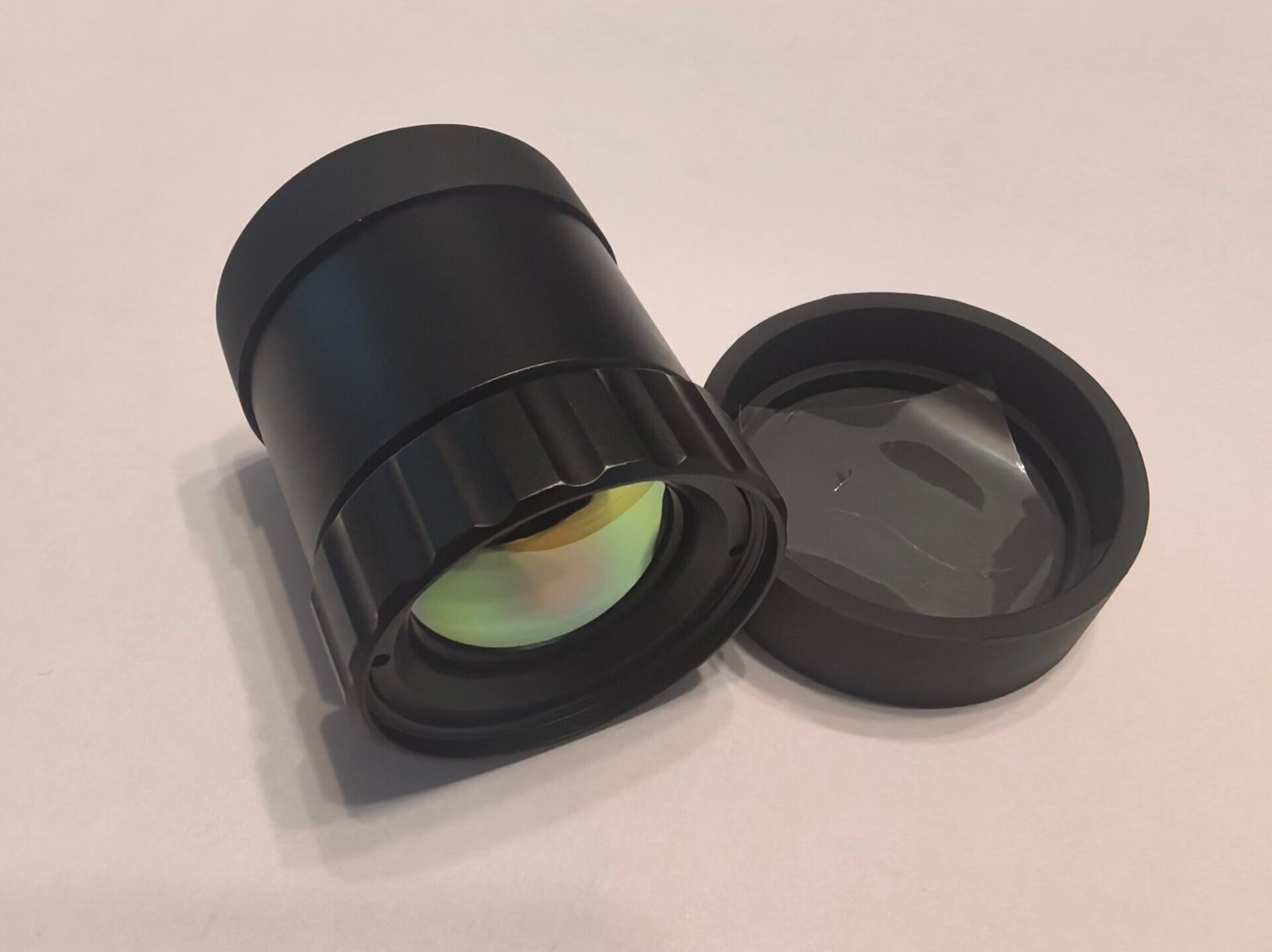
Why Synthetic Sapphire Dominates LWIR Thermal Imaging
Germanium has been a standard material for infrared optics for decades, but synthetic sapphire offers decisive advantages that make it increasingly preferred in demanding thermal imaging applications.
No Temperature Management Required: Germanium experiences "thermal runaway" above 100°C, becoming essentially opaque as temperature increases. Sapphire maintains optical transmission at temperatures exceeding 500°C ambient without any special coatings or cooling systems. For industrial furnaces, steel mills, and petrochemical monitoring, sapphire windows eliminate the thermal management complexity that makes germanium systems expensive and failure-prone.
Scratch and Abrasion Resistance: At 9 Mohs hardness, sapphire resists abrasion from particulate matter, sand, and repeated cleaning. Germanium at 6 Mohs requires delicate handling and easily scratches in field deployments. Sapphire windows deployed in outdoor or desert environments survive conditions where germanium would require protective shutters or frequent replacement.
LWIR Transmission for 8–14μm Systems: Sapphire transmits effectively in the 8–14μm LWIR band where most commercial thermal cameras operate. Combined with its broadband transmission from visible through mid-infrared, sapphire is ideal for dual-band thermal imaging systems that need both daylight and nighttime capability in ruggedized form factors.
Long-Term Cost of Ownership: While raw germanium has moderate material cost, the supporting systems (thermal coolers, protective coatings, replacement schedules) make the total cost of ownership significantly higher. Sapphire's durability reduces maintenance frequency, eliminating the need for active cooling in most industrial applications.
The Critical Material Selection Mistake to Avoid
⚠️ Do not use sapphire for MWIR (3–5μm) applications expecting good transmission.
Sapphire's theoretical transmission range extends to approximately 6μm, but in practical window thicknesses (2mm+), absorption rises sharply above 4μm. For MWIR thermal imaging or laser systems operating at 3–5μm, sapphire will deliver poor transmission performance.
Correct MWIR (3–5μm) material choices:
| Material | Advantages | Best For |
|---|---|---|
| Chalcogenide Glass | Lightweight, moldable, cost-effective | Consumer and industrial MWIR cameras |
| Zinc Selenide (ZnSe) | Excellent MWIR transmission, laser compatible | Laser systems, high-power MWIR optics |
| Calcium Fluoride (CaF₂) | Broad MWIR transmission, low absorption | Scientific MWIR applications |
Sapphire remains the correct choice for:
- LWIR (8–14μm) thermal cameras ✅
- High-temperature environments above 200°C ✅
- Chemically corrosive atmospheres ✅
- Abrasive or mechanically stressful conditions ✅
- Defense optics requiring ballistics resistance ✅
Sapphire's Optical Properties for LWIR Applications
Understanding sapphire's fundamental optical properties helps engineers make informed decisions for LWIR thermal imaging systems.
Spectral Transmission: Synthetic sapphire transmits effectively from 0.2μm (UV) through visible wavelengths to approximately 6μm, with useful transmission in the 8–14μm LWIR band when optimized for thickness. For LWIR thermal imaging cameras (the majority of commercial and defense applications), sapphire delivers solid performance across the primary thermal imaging band.
Refractive Index: Sapphire's refractive index of approximately 1.76 at 4μm wavelengths means standard anti-reflective (AR) coatings reduce surface reflectance from 14% to under 1% per surface, significantly improving thermal signal transmission. Broadband AR coatings are available for multi-spectral applications.
Thermal Shock Resistance: With a thermal expansion coefficient of only 5.3×10⁻⁶/K, sapphire survives rapid temperature cycling without cracking. This property is critical for outdoor thermal cameras experiencing wide temperature swings and for aerospace defense applications where optics must function across extreme thermal gradients.
Chemical Inertness: Sapphire (Al₂O₃) resists corrosion from moisture, most acids, and alkalis. Its only significant chemical vulnerability is hydrofluoric acid (HF). This makes sapphire the preferred material for marine environments, chemical processing plants, and anywhere corrosion-resistant optical windows are required.
Optical Homogeneity: Unlike natural sapphire, synthetic sapphire grown by Kyropoulos or Czochralski methods achieves 99.99% purity with near-zero inclusions. Any inclusions or bubbles would scatter infrared light, degrading thermal image quality. Industrial-grade synthetic sapphire is produced under tightly controlled conditions for consistent optical performance lot-to-lot.
Key Applications: Industrial Monitoring, Defense Optics, Outdoor Thermal Cameras
The combination of optical clarity, thermal durability, and mechanical strength makes synthetic sapphire windows essential across three major application categories.
Industrial Process Monitoring: Steel mills, glass manufacturing, and petrochemical facilities deploy thermal cameras in environments exceeding 500°C ambient temperature. Sapphire windows handle these conditions where germanium would thermally deform without active cooling and zinc sulfide would corrode in the presence of hydrogen sulfide and other aggressive process gases. The chemical inertness of sapphire provides long-term durability in these chemically aggressive environments.
Defense and Security Optics: Military-grade thermal sights, missile seekers, and airborne reconnaissance systems require sapphire windows that survive extreme temperature cycling, high G-forces, and ballistic impacts. Sapphire's combination of hardness and thermal shock resistance makes it viable for defense applications without expensive multi-layer protective coatings. Many NATO defense contractors specify sapphire windows in their optical system requirements for ruggedized thermal imaging platforms.
Outdoor and Environmental Thermal Imaging: Thermal cameras deployed for building diagnostics, electrical infrastructure inspection, and environmental monitoring face challenging outdoor conditions including dust, sand, salt air, and rapid temperature changes. Sapphire windows provide the scratch resistance and environmental durability that eliminate the need for protective shutters or frequent optical maintenance in field-deployed thermal imaging equipment.
Technical Specifications Comparison
| Property | Synthetic Sapphire | Germanium | Zinc Sulfide (ZnS) |
|---|---|---|---|
| Hardness (Mohs) | 9 | 6 | 5 |
| Thermal Expansion (×10⁻⁶/K) | 5.3 | 6.1 | 7.6 |
| Max Service Temperature (°C) | 2000 | 100 | 500 |
| LWIR Transmission (8–14μm) | Good | Excellent | Good |
| MWIR Transmission (3–5μm) | Poor | Good | Good |
| Young's Modulus (GPa) | 400 | 143 | 97 |
| Refractive Index (at 4μm) | 1.76 | 4.0 | 2.2 |
| Thermal Shock Resistance | Excellent | Poor | Good |
| Chemical Resistance | Excellent | Good | Good |
| Density (g/cm³) | 3.98 | 5.33 | 4.09 |
Note: For MWIR (3–5μm) applications, sapphire is not recommended. Consider chalcogenide glass, ZnSe, or CaF₂ instead. Germanium requires active thermal management above 100°C to maintain optical performance.
FAQ: Common Questions About Sapphire Infrared Windows
Q: Can sapphire windows be used for MWIR thermal imaging (3–5μm)?
A: No. Sapphire's absorption rises sharply above 4μm in practical window thicknesses, making it unsuitable for MWIR applications. For MWIR systems, use chalcogenide glass, zinc selenide (ZnSe), or calcium fluoride (CaF₂). Sapphire is the correct choice for LWIR (8–14μm) thermal imaging where its superior durability and environmental resistance provide significant advantages.
Q: What is the maximum size for sapphire infrared windows?
A: Wanbaotek produces sapphire windows from 5mm to 200mm diameter, with custom sizes and geometries available for OEM applications. Thickness ranges from 0.5mm to 20mm depending on pressure and thermal requirements. For diameters above 100mm, note that sapphire's hardness makes machining more challenging and may affect surface quality at larger scales compared to germanium.
Q: What coatings are available for sapphire infrared windows?
A: Anti-reflective (AR) coatings are standard, typically reducing surface reflectance from 14% to under 1% per surface. Diamond-like carbon (DLC) coatings can be added for enhanced scratch resistance in sand or particulate environments. Broadband AR coatings are available for multi-spectral applications requiring both visible and infrared transmission.
Q: Why does sapphire sometimes cost less than germanium in the long run?
A: While raw sapphire material costs may be comparable to or higher than germanium, germanium requires expensive thermal management systems (thermoelectric coolers) to maintain transmission above 100°C. Sapphire operates effectively at temperatures exceeding 500°C without any cooling. Over the system lifetime, the elimination of cooling hardware, reduced replacement frequency, and lower maintenance costs often make sapphire the more economical choice for industrial and outdoor thermal imaging applications.
Q: What lead times are typical for custom sapphire windows?
A: Standard catalog sapphire windows typically ship within 2–4 weeks. Custom geometries and sizes generally require 4–8 weeks depending on complexity. For production quantities, Wanbaotek offers rapid prototyping and scale-up manufacturing with 20-day lead times for standard configurations. Large-diameter windows (above 100mm) may require additional lead time due to machining complexity.
Get a Quote for Your Thermal Imaging Sapphire Components
Wanbaotek (Sichuan Wanbaohui Technology Co., Ltd.) specializes in precision synthetic sapphire optical components for infrared and thermal imaging applications. With over 3,800 industrial solutions delivered and ISO-quality manufacturing standards, we provide rapid prototyping and volume production for sapphire windows, lenses, and custom geometries.
Our engineering team supports material selection consultation—including helping you avoid the sapphire vs. germanium selection trap—and can provide thermal testing data, transmission curves, and environmental qualification documentation for your specific application requirements. Contact us today for pricing, lead time, and material recommendation for your thermal imaging project.
Related Articles
- Sapphire Lens Overview
- Sapphire Precision Components Applications
- Industrial Sapphire Window Overview
- Property Table of Al₂O₃
Last updated: 2026-05-22