
How to choose sapphire lens supplier?
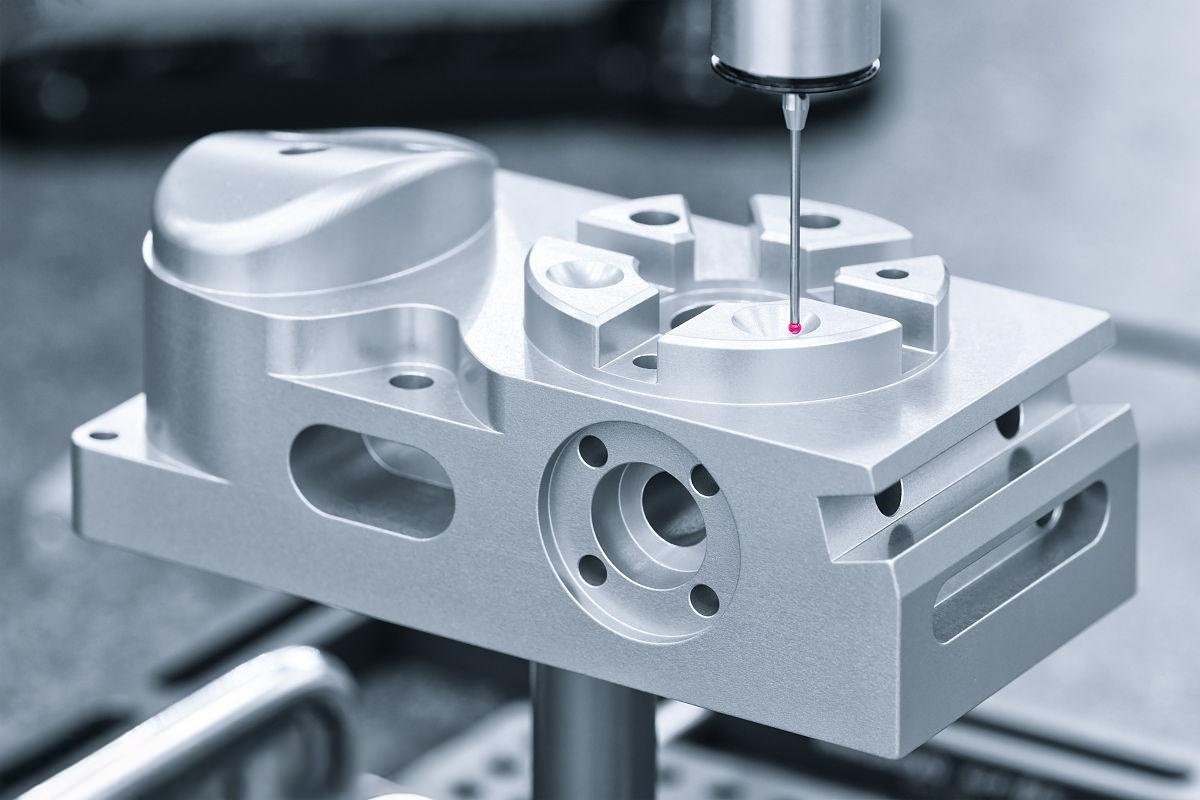
5 Key Criteria for Evaluating Sapphire Lens Suppliers
1. Material Consistency and Optical Quality Verification
The fundamental quality metric for any sapphire lens supplier is whether the material delivers the optical performance your application requires—consistently, across every production batch.
What to evaluate:
- Crystal growth method: Kyropoulos (KY) and Heat Exchanger Method (HEM) produce the highest quality synthetic sapphire with minimal inclusions. Understand which method your supplier uses and how it affects transmission properties.
- Purity levels: Industrial-grade synthetic sapphire should achieve 99.99% Al₂O₃ purity. Some suppliers blend or recycle material that introduces optical scatter.
- Inclusion-free certification: Request transmission data and scatter measurements for each batch, not just specifications. The difference between theoretical and actual performance can be significant in demanding IR applications.
- Lot-to-lot consistency: Ask for three months of production deviation data. A supplier that cannot demonstrate consistent output across lots is a risk you should not accept for production-grade procurement.
Red flag: A supplier that provides only theoretical specifications without actual batch test data.
2. Quality Certifications Your Application Requires
Certification requirements vary dramatically by application. A supplier qualified for medical device OEM may be entirely wrong for aerospace or defense applications—and vice versa.
Key certifications by industry:
| Industry | Required Certifications |
|---|---|
| Medical Device | ISO 10993 biocompatibility testing, FDA device registration, ISO 13485 if manufacturing finished devices |
| Aerospace / Defense | AS9100, NADCAP accreditation, ITAR registration where applicable |
| Industrial | ISO 9001 quality management, PPAP documentation for automotive applications |
| Semiconductor | Semiconductor equipment standards, defect density reporting |
What to verify:
- Request copies of actual certificates, not marketing claims. Verify expiration dates and audit history.
- For medical applications, confirm the supplier has documented ISO 10993 testing for the specific sapphire grades they supply—not just general material compliance.
- If your customer requires PPAP documentation, confirm the supplier can provide production part approval process documentation before you commit to a purchase order.
Red flag: A supplier that cannot produce certificates within two business days of request.
3. Lead Time Reliability and Production Capacity
Sapphire lens lead times matter because optical system production schedules depend on component delivery timelines that are often non-negotiable.
What to evaluate:
- Standard catalog lead times: Most suppliers quote 2–4 weeks for catalog items, though some hold inventory for faster delivery.
- Custom geometry lead times: For non-standard sizes, geometries, or coatings, lead times of 6–12 weeks are common. Be skeptical of suppliers promising custom work in under four weeks.
- Production capacity: Understand whether the supplier has in-house CNC machining, coating capability, and metrology—or whether they subcontract. Subcontracting introduces schedule risk and quality variance.
- Expedite capability: Ask whether the supplier can accommodate rush orders and what the associated costs and time savings are.
Questions to ask:
- "What percentage of your orders ship on or before the quoted lead time?"
- "Do you manufacture in-house or subcontract machining and coating?"
- "What is your maximum production capacity per month for sapphire lenses in the 10–50mm diameter range?"
Red flag: A supplier that cannot explain their production process or identify which steps they perform in-house.
4. Customization Capability and Engineering Support
Standard catalog sapphire lenses fit many applications, but OEM projects frequently require custom geometries, special coatings, or non-standard tolerances. Your supplier's customization capability determines whether they can support your product roadmap or limit it.
What to evaluate:
- Custom geometry experience: Ask for examples of non-standard sapphire lenses they have manufactured. Size ranges, unusual geometries, and complex surface specifications all indicate engineering maturity.
- Coating options: Anti-reflective (AR) coatings, diamond-like carbon (DLC) coatings, and specialized multi-layer coatings require different equipment and process expertise. Confirm the supplier's coating capabilities match your requirements.
- Engineering collaboration: A capable supplier should be able to advise on material selection, tolerance stack-ups, and mounting considerations—not just accept your purchase order and figure it out later.
- Prototype capability: For new product development, ask whether the supplier offers prototype runs before committing to production volumes. Prototype runs validate manufacturability and reduce risk.
Red flag: A supplier that only offers catalog items with no customization capability—and tells you to "design around what we have."
5. Transparent Pricing and Total Cost of Ownership
Sapphire lens pricing varies significantly based on size, tolerance, quantity, and coating requirements. Transparent pricing is a signal of supplier maturity and stability.
What to evaluate:
- Unit pricing vs. volume pricing: Request a complete price matrix that shows how pricing scales across order quantities. Be wary of suppliers that only quote per-unit pricing without quantity context.
- Tooling and setup costs: Custom geometries may require tooling or setup charges. A transparent supplier should itemize these costs separately from unit pricing.
- Hidden costs: Shipping, quality verification documentation, custom packaging, and inspection reports can add significant cost. Ask for a complete cost breakdown, not just the component price.
- Payment terms: Understand the supplier's payment terms, especially for first-time orders. Some suppliers require prepayment; others offer net-30 or net-60 terms for established accounts.
Questions to ask:
- "What is included in the quoted price—tooling, inspection reports, documentation?"
- "Do you offer volume pricing tiers, and if so, at what quantities do discounts apply?"
- "Are there additional charges for certificates of conformance, special packaging, or expedited shipping?"
Red flag: A supplier that refuses to provide itemized pricing or becomes defensive when asked about cost breakdown.
How to Shortlist Sapphire Lens Suppliers: A Practical Evaluation Framework
Use this framework to systematically evaluate suppliers for your specific application.
Step 1: Define your requirements before contacting suppliers
- Application requirements (LWIR thermal imaging, medical endoscopy, industrial sensing)
- Certification requirements (ISO 10993, AS9100, ITAR)
- Size range and geometry specifications
- Volume requirements (prototype, pilot, production)
- Timeline constraints
Note on LWIR applications: Sapphire transmission cuts off at ~6μm. For LWIR (8–14μm) thermal imaging, consider ZnSe or Germanium components. Confirm your supplier clarifies material transmission limits to avoid procurement errors.
Step 2: Request supplier qualification packages
Ask each potential supplier for:
- Company profile and manufacturing capabilities overview
- Quality certifications (current, with expiration dates)
- Case studies or application examples matching your industry
- Price matrix for standard items and custom work
Step 3: Evaluate technical capability before price
Price should be the final evaluation criterion, not the first. A supplier that is 10% cheaper but cannot meet your certification requirements or timeline is not a savings.
Step 4: Request samples for critical applications
For production applications where optical performance is critical, request samples before committing to volume orders. Test samples against your application's acceptance criteria.
Why Engineers Choose Wanbaotek as Their Sapphire Lens Supplier
Wanbaotek (Sichuan Wanbaohui Technology Co., Ltd.) has delivered over 3,800 sapphire optical component solutions to customers worldwide. We specialize in serving procurement engineers and technical managers who need reliable suppliers for mission-critical optical systems.
What sets Wanbaotek apart:
- Consistent material quality: KY and HEM grown synthetic sapphire with 99.99% purity. Every batch verified with transmission measurements.
- Multiple industry certifications: ISO 9001 quality management. ISO 10993 biocompatibility testing documentation available for medical device applications.
- Reliable lead times: 2–4 weeks for catalog items. 4–8 weeks for custom geometries. Production capacity of 5,000+ units monthly.
- Full customization capability: In-house CNC machining, precision measurement, and AR/DLC coating. Engineering support from design through production.
- Transparent pricing: Itemized quotes with complete cost breakdown. Volume pricing tiers. No hidden charges.
Get your free quote: Contact our engineering team with your specifications. We respond within 24 hours with pricing, lead time, and technical recommendations.
FAQ: Sapphire Lens Supplier Selection
Q: What is the minimum order quantity (MOQ) for sapphire lenses?
A: MOQ varies by supplier and specification. Wanbaotek offers MOQ as low as 5 pieces for standard catalog items. Custom geometries typically require minimum orders of 10–25 pieces depending on complexity and tooling requirements. Contact us with your specifications for an accurate MOQ quote.
Q: How do I verify a sapphire lens supplier's quality certifications?
A: Request copies of current certificates directly from the supplier. For ISO certifications, verify through the certifying body's public registry. For medical device applications, request the specific ISO 10993 test reports—not just a declaration of conformance. Ask for batch-level traceability documentation.
Q: What is a reasonable lead time for custom sapphire lenses?
A: Standard catalog sapphire lenses typically ship in 2–4 weeks. Custom geometries, non-standard sizes, or special coatings generally require 4–8 weeks. Be cautious of suppliers promising custom work in under 3–4 weeks, as sapphire machining and coating processes have physical minimum cycle times.
Q: Can I get samples before placing a production order?
A: Yes. Most suppliers, including Wanbaotek, offer sample orders for qualification testing. Sample orders allow you to verify optical performance, surface quality, and dimensional accuracy before committing to production volumes. Ask about sample pricing and lead time when you request quotes.
Q: How do I evaluate sapphire lens suppliers for medical device applications?
A: For medical device OEM, prioritize suppliers that can provide: ISO 10993 biocompatibility documentation for the specific sapphire material they supply, traceable batch documentation for incoming inspection, and experience with medical device industry quality management requirements. Request customer references in your specific application area if available.
Related Articles
- Sapphire Lens Overview
- Medical Sapphire Lens: Endoscopy, Laser Surgery & Dental Guide
- Sapphire Precision Components Applications
- How Do We Make a Sapphire Window?
Last updated: 2026-05-22