
Ceramic Plunger for Precision Metering Pumps: Material Selection Guide for OEM Manufacturing
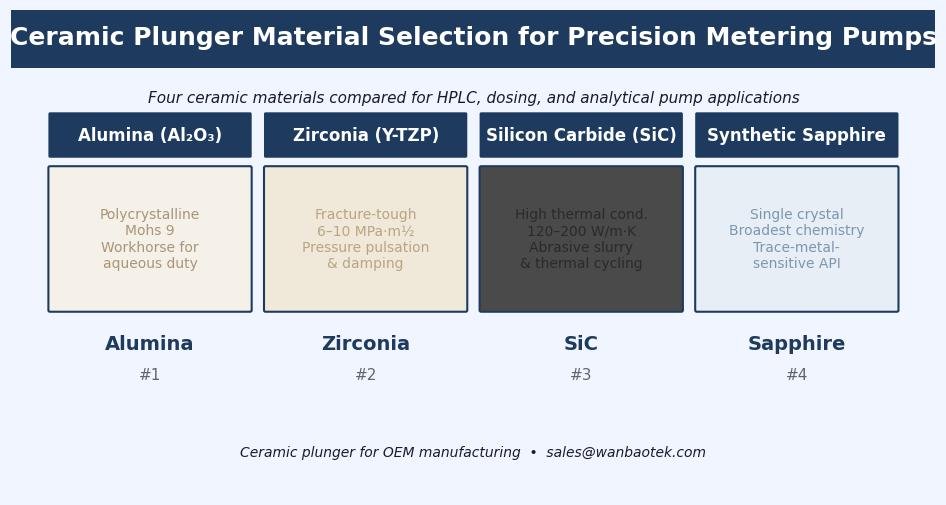
Ceramic Plunger Precision Metering Pump Material Selection: OEM B2B Guide
Featured Snippet
A ceramic plunger for precision metering pumps should be matched to process chemistry, wear duty, and purity. Compare alumina, zirconia, silicon carbide, and synthetic sapphire — each solves a different problem.
SEO Meta
- Focus Keyword: ceramic plunger
- Secondary Keywords: precision metering pump plunger, HPLC pump plunger, chemical dosing plunger, alumina plunger, zirconia plunger, silicon carbide plunger, sapphire plunger
- Meta Title: Ceramic Plunger for Precision Metering Pumps: Material Selection Guide for OEM Manufacturing
- Meta Description: Ceramic plunger material selection for precision metering pump OEM procurement. Compare alumina, zirconia, silicon carbide, and sapphire chemical compatibility, wear rate, and total cost of ownership.
Introduction
A ceramic plunger for precision metering pumps fails in three predictable ways: wear, seal leakage, or chemistry attack. In OEM pump design, specification engineers choose between four ceramic material families — alumina, zirconia, silicon carbide, and synthetic sapphire — for the plunger-and-check-valve pair. The wrong choice shows up as unplanned downtime, batch contamination, or premature service intervals.
This guide walks through each ceramic family used in precision metering pump plungers, breaks down their chemical compatibility with the most common process chemistries, and closes with a material selection framework you can map directly to your pump specification. The discussion focuses on OEM-grade components sourced through established ceramic-component suppliers such as Wanbaotek (Sichuan Wanbaohui Technology) for synthetic sapphire, and applies equally to HPLC solvent delivery pumps, chemical metering pumps, and analytical reagent pumps.
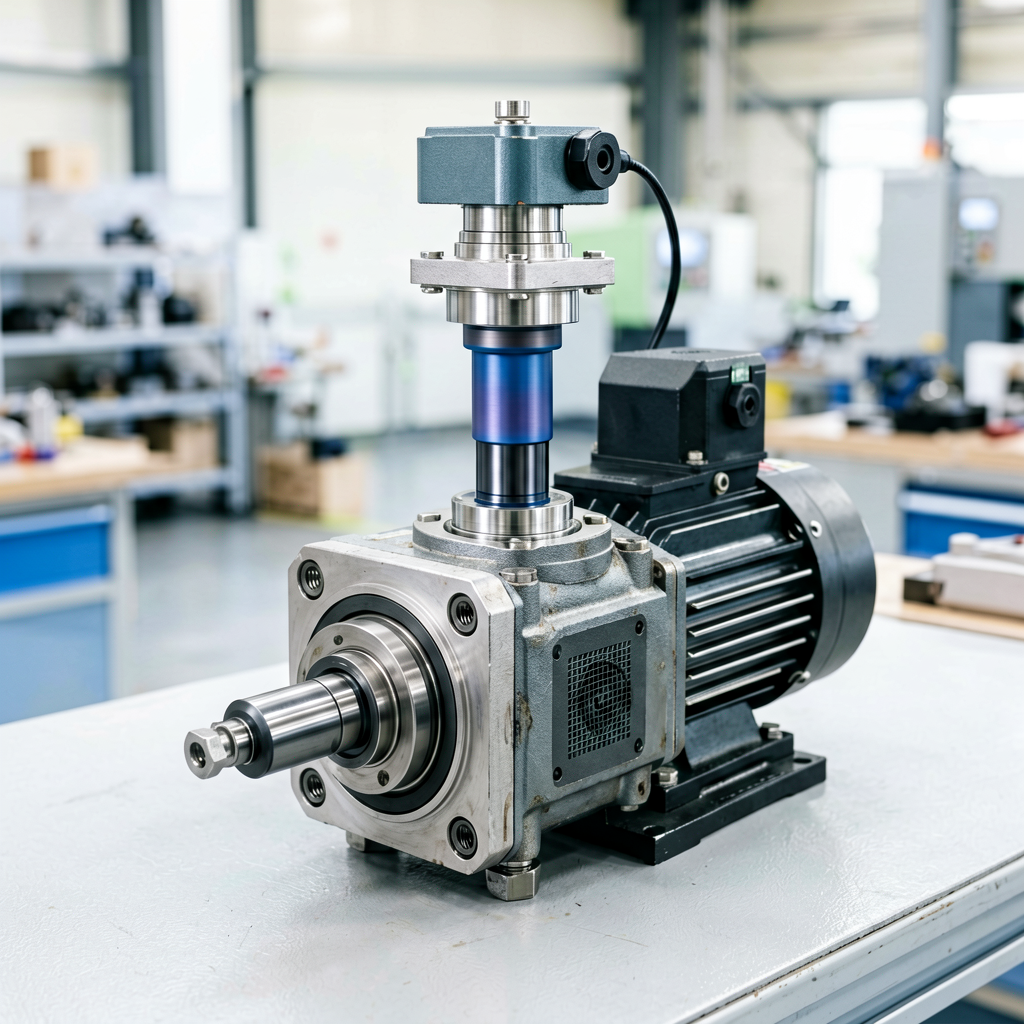
Precision metering pumps run across three distinct duty regimes, and each favors a different ceramic material.
1. Aqueous laboratory and pharmaceutical duty — short stroke, low pressure, high purity requirements
2. Chemical processing and water-treatment duty — long stroke, moderate pressure, aggressive chemistry
3. Slurry and abrasive service — high cycle rate, particulate loading, impact stress
Across these duty regimes, four ceramic families dominate OEM pump designs:
- Alumina (Al₂O₃) — workhorse material, purity grades from 95% to 99.7%
- Zirconia (ZrO₂), typically yttria-stabilized tetragonal zirconia polycrystal (Y-TZP) — high fracture toughness
- Silicon carbide (SiC), sintered or reaction-bonded — high thermal conductivity and abrasive-wear resistance
- Synthetic sapphire (Al₂O₃ single crystal) — broadest chemical compatibility and lowest leachables, supplied as finished plunger blanks by suppliers such as Wanbaotek (Sichuan Wanbaohui Technology)
Alumina and synthetic sapphire share an identical chemical formula; the difference is microstructure. Alumina is a polycrystalline body with inter-grain phases that can preferentially etch under aggressive chemistry. Synthetic sapphire is a single crystal with no grain boundaries and therefore no preferential etch path.
Zirconia and silicon carbide are separate chemistries with different failure modes. Zirconia delivers fracture toughness at the cost of long-term stability in hot wet service. Silicon carbide delivers wear and thermal-cycling resistance at the cost of being difficult to lap to a mirror finish.
💡 Key Insight: Most pump failures blamed on "ceramic plunger wear" actually trace back to a chemistry mismatch — not an abrasion problem. Start with process chemistry before you look at wear rate.
🚩 Red Flag: Don't specify a single "best" ceramic across an entire pump product line. An HPLC solvent delivery pump has a different optimal ceramic than a pump built for sodium hypochlorite metering. The four materials coexist because no single material wins every duty regime.
H2-2: Ceramic Plunger Material Compatibility with Process Chemistry
This table is the single most important deliverable in this guide. Read it before you write the next pump specification.
| Process Chemistry | Alumina (99%) | Zirconia (Y-TZP) | Silicon Carbide (SiC) | Synthetic Sapphire |
|---|---|---|---|---|
| Deionized water and buffers | ✅ | ✅ | ✅ | ✅ |
| Mineral acids (dilute HCl, H₂SO₄) | ✅ | ⚠️ limited | ✅ | ✅ |
| Hydrofluoric acid or fluoride buffers | ❌ | ❌ | ❌ | ⚠️ limited |
| Hot sodium hydroxide / KOH | ❌ | ⚠️ dilute only | ⚠️ dilute only | ✅ |
| HPLC-grade organic solvents | ✅ | ✅ | ✅ | ✅ |
| Sodium hypochlorite 12.5% | ⚠️ | ⚠️ | ✅ | ✅ |
| Slurries with abrasive particles | ⚠️ | ✅ | ✅ | ✅ |
| Trace-metal-sensitive API | ⚠️ | ⚠️ | ⚠️ | ✅ |
Reaction-bonded silicon carbide and synthetic sapphire show the broadest chemistry compatibility. Synthetic sapphire additionally offers the lowest trace-metal release of the four, because the single-crystal structure contains no inter-grain phases that can preferentially leach.
Zirconia (Y-TZP) is vulnerable to low-temperature degradation — a slow transformation from tetragonal to monoclinic phase that causes surface uplift and eventual spalling in hot wet environments. If you are specifying zirconia for warm aqueous service, request documented yttria content and grain-size distribution from the manufacturer.
🚩 Red Flag: Hydrofluoric acid at any concentration dissolves all four materials. If your process contains HF or fluoride-bearing buffers at low pH, you are in the polymer plunger domain, not the ceramic plunger domain.
For a detailed breakdown of sapphire's chemical resistance profile (including HF vulnerability and hot alkali performance), see Understanding ISO 10993 for Sapphire Optics and Material Properties Comparison.
💡 Key Insight: For trace-metal-sensitive applications — semiconductor wet-etch, pharmaceutical active pharmaceutical ingredient synthesis, analytical reagent pumps — synthetic sapphire is the conservative default. The single-crystal structure eliminates the grain-boundary leachables that can complicate even 99.7% alumina components.
H2-3: Ceramic Plunger Mechanical Performance: Wear Rate, Fracture, and Thermal Cycling
Beyond chemistry, three mechanical parameters drive pump field reliability: wear rate, fracture toughness, and thermal-shock resistance.
| Property | Alumina (99%) | Zirconia (Y-TZP) | Silicon Carbide (SiC) | Synthetic Sapphire |
|---|---|---|---|---|
| Mohs hardness | 9 | 8–8.5 | 9.5 | 9 |
| Fracture toughness (MPa·m½) | 3–4 | 6–10 | 3–5 | ≈ 5 (anisotropic) |
| Thermal conductivity (W/m·K @ 25°C) | 30 | 2–3 | 120–200 | 35–46 |
| Thermal expansion coefficient (×10⁻⁶/°C) | 7–8 | 10–11 | 4–5 | 5–6 |
| Typical plunger surface finish Ra (μm) | 0.2–0.4 | 0.1–0.2 | 0.2–0.4 | 0.05–0.2 |
Reaction-bonded silicon carbide dominates wear and thermal-cycling duty because its very high thermal conductivity moves heat away from the seal face quickly. Synthetic sapphire has a thermal conductivity of 35–46 W/(m·K), substantially higher than alumina, and is anisotropic (different on c-axis vs a-axis), so design must respect the crystal orientation. Zirconia's low thermal conductivity makes it the wrong choice for hot duty cycles despite its excellent fracture toughness.
For multi-channel dosing manifolds where synchronized valve actuation creates rapid pressure differentials, zirconia's elastic damping smooths hydraulic shock before it reaches downstream sensors. Alumina has higher elastic modulus and transmits more shock; synthetic sapphire transmits less shock than alumina on the c-axis but more than zirconia.
🚩 Red Flag: A ceramic plunger that maximizes fracture toughness while also maximizing thermal conductivity does not exist among the four families. Each material trades one property for the others. Specify the property you most need, then accept the trade-off explicitly.
💡 Key Insight: Surface finish matters more than bulk hardness for plunger life. A 99% alumina plunger lapped to Ra 0.1 μm will outlast a 99.5% alumina plunger at Ra 0.4 μm, even though the higher-purity grade costs more. Specify the finish, not the purity.
For sapphire-specific crystallographic detail (c-axis vs a-axis thermal conductivity, single-crystal anisotropy, surface finish to Ra ≤ 0.1 μm), see Precision Sapphire Machining and Sapphire Lens Overview for the optical-grade finish reference that drives Wanbaotek's ceramic plunger production.
🚩 Red Flag: Thermal conductivity values in the comparison table are approximate averages. Synthetic sapphire is anisotropic — its c-axis thermal conductivity differs from the a-axis. For a plunger machined with the crystal axis misaligned, the published number overstates field performance. Confirm crystal orientation with the sapphire supplier before finalizing the heat-transfer design.
H2-4: Ceramic Plunger Service Life by Material in Precision Pump Applications
Three reference duty cases illustrate how the material decision propagates into pump field performance and total cost of ownership.
Duty case 1 — HPLC pump, acetonitrile–water gradient, 5000 psi peak pressure, 24/7 service at a pharmaceutical QC lab. A synthetic sapphire plunger at Ra 0.05 μm runs 12 months between seal replacements. The same pump with a 99% alumina plunger at Ra 0.4 μm runs 4 months. The plunger cost difference is roughly 4×; the total pump cost-of-ownership difference narrows to roughly 1.4× because seal and labor dominate.
Duty case 2 — Sodium hypochlorite metering, 10–12.5% available chlorine, 60 °C process temperature, 24/7 service at a municipal water-treatment plant. Zirconia shows pitting on the wetted seal face after roughly 6 months; alumina survives 9 months with visible grain-boundary attack. Reaction-bonded silicon carbide and synthetic sapphire both run 18 months or longer in the same installation, with sapphire showing the smoother post-service surface finish.
Duty case 3 — Slurry pump, 20% calcium carbonate, intermittent duty, room temperature. Zirconia and reaction-bonded silicon carbide both run 18 months before seal replacement. Alumina wears in 9 months; synthetic sapphire delivers a comparable 14–16 months service interval at higher per-plunger cost but with no chemistry-driven grain-boundary attack.
These reference duty cases are aggregated field data from OEM pump builders running identical pump mechanics with different ceramic plungers across multi-unit fleet installations,
For additional case studies on industrial sapphire window assemblies used in vacuum pump and process chambers, see Wanbaotek's technical library. For additional ceramic-plunger case studies on industrial sapphire window assemblies used in vacuum pump and process chambers, see Wanbaotek's case-study library.
H2-5: Ceramic Plunger Selection Framework for OEM Pump Specification
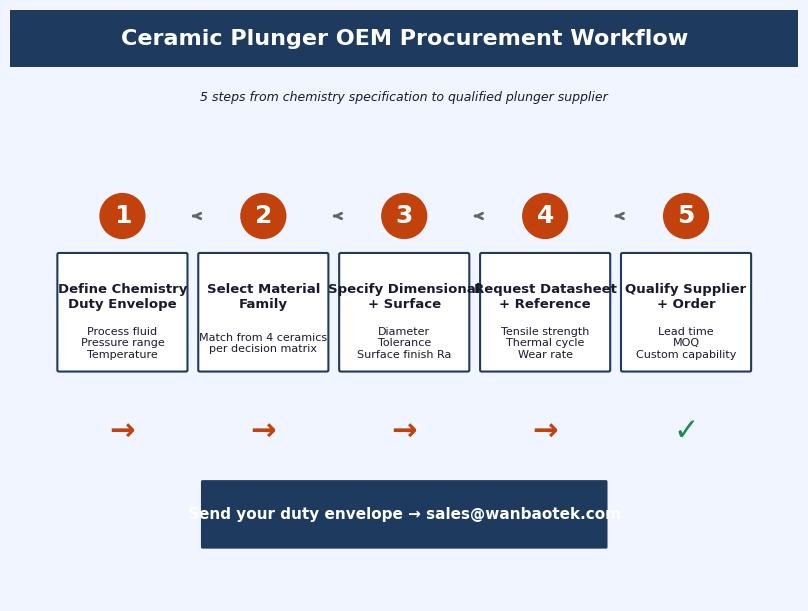
Use the framework below to map your pump specification to one of the four ceramic families. The decision pivots on three questions: process chemistry severity, mechanical duty severity, and purity requirement.
1. Process chemistry severity — Does the process fluid contain halide acids, hot alkali, or trace-metal-sensitive analytes?
2. Mechanical duty severity — Is the duty cycle dominated by pressure pulsation, abrasive slurry, or thermal cycling?
3. Purity requirement — Is the application trace-metal-sensitive, sterile, or HPLC-grade?
| If your priority is… | Specify… | Why |
|---|---|---|
| Lowest unit cost in general aqueous duty | Alumina (99%) | Lowest unit price; sufficient for water and buffer service |
| Fracture toughness under pressure pulsation | Zirconia (Y-TZP) | Highest fracture toughness; absorbs hydraulic shock |
| Aggressive slurry with thermal cycling | Reaction-bonded SiC | Highest thermal conductivity moves heat off the seal face |
| Broadest chemistry compatibility | Synthetic sapphire | Single-crystal chemistry; no grain-boundary attack |
| Lowest trace-metal release for high-purity applications | Synthetic sapphire | No grain-boundary phases to preferentially leach |
| Sterilization-by-autoclave (134 °C steam, repeated) | Synthetic sapphire or alumina | Both tolerate; sapphire preferred for trace-metal-sensitive loads |
🚩 Red Flag: If your pump specification requires a single material to cover a fleet that spans HPLC solvent delivery, abrasive slurry, and hypochlorite metering — you are choosing chemical compatibility out of specification. Standard practice is to standardize the pump mechanic, but specify the ceramic plunger material per duty regime.
💡 Key Insight: For most OEM pump product lines, the optimal procurement strategy is to qualify two ceramic materials — for example, alumina for general aqueous duty and synthetic sapphire for trace-metal-sensitive applications — rather than standardizing on one material across the line. This reduces your bill of materials by 50% while keeping the chemistry right for every install.
Based on Wanbaotek's decades of sapphire component supply expertise and OEM pump plunger partnerships, the most common mistake we observe is selecting one ceramic for a product line that spans HPLC solvent delivery and sodium hypochlorite metering — two chemistry environments that no single ceramic material can satisfy.
Conclusion
The four ceramic material families used in precision metering pump plungers — alumina, zirconia, silicon carbide, and synthetic sapphire — coexist because each one solves a different problem. Polycrystalline alumina is the workhorse for general aqueous service. Y-TZP zirconia delivers fracture toughness for high-pulsation duty. Reaction-bonded silicon carbide handles aggressive slurries and thermal cycling. Synthetic sapphire delivers the broadest chemistry compatibility and the lowest trace-metal release for high-purity and trace-metal-sensitive applications. OEM procurement teams should standardize the pump mechanic but specify the plunger material by duty regime — and qualify at least one single-crystal option (synthetic sapphire or single-crystal silicon carbide) for trace-metal-sensitive installations.
Decision Matrix
| Priority Rank | Recommendation |
|---|---|
| Lowest unit cost + general aqueous service | Alumina (99%) |
| Abrasive slurry + thermal cycling | Reaction-bonded SiC |
| Pressure pulsation + dosing manifold | Y-TZP Zirconia |
| Broadest chemistry + trace-metal-sensitive | Synthetic sapphire |
| Autoclave sterilization + repeated steam cycles | Synthetic sapphire or high-purity alumina |
Next Steps (CTA)
For a material recommendation matched to your specific process chemistry and pump mechanics, send the duty envelope to Wanbaotek at sales@wanbaotek.com with the subject line "Ceramic Plunger Material Recommendation." A senior application engineer will respond within one business day with a material selection matrix and prototype lead time.
🚩 Red Flag: Don't specify a single ceramic for a fleet spanning HPLC, dosing, and hypochlorite duty — each chemistry demands a different material. Standardize the pump mechanic; qualify two materials per duty regime.
Visit /contact/ to open a technical inquiry or request a free sample.
Related Articles
- Sapphire Lens Overview — sapphire's optical-grade surface finish and material property set
- What is Synthetic Sapphire — single-crystal sapphire thermal, optical, and mechanical reference values
- Precision Sapphire Machining — how sapphire plungers and check valves are finished to Ra ≤ 0.1 μm
- Industrial Sapphire Window Overview — sapphire window selection for high-pressure and vacuum process chambers
- Sapphire Precision Components — design-support options for non-standard plunger geometries
About Wanbaotek
Wanbaotek (Sichuan Wanbaohui Technology Co., Ltd.) is a trusted supplier of high-precision ceramic and synthetic sapphire components for metering pump OEMs, including plungers, balls, valves, and wear-resistant parts. Every component is supported by material traceability, lot-level CoC documentation, and application-specific dimensional metrology, from prototype quantities through volume production.